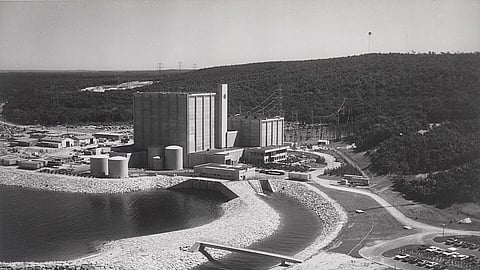


PLYMOUTH — The select board shot down a proposal by Chair David Golden to place a question about renovating an out-of-service nuclear power plant on the recent town meeting ballot, but members said they supported surveying voters about the issue in a future meeting.
The non-binding referendum would have asked voters whether or not they supported the town exploring options for re-opening Pilgrim Nuclear Power Station, which shut down May 2019 after 46 years in operation. Golden said the plant generated enough electricity to power 15% of Massachusetts homes—and substantial revenue for the town of Plymouth.
“It represents a loss of revenue through local real estate taxes as well as personal property taxes,” he said of the decommissioning of Pilgrim. “And just as importantly, it's a reduction in the energy supply to the region, and that impacts energy and affordability for all of us. Basically, we kept the burden and we lost the benefit of having a nuclear power plant here in town.”
In advocating for the town to explore the idea of reopening the plant, Golden said that it was valued at $514 million in 2019, giving the town $8.5 million in tax revenue.
Since then, residential taxes have jumped from about 69% of the levy to 86%, he said, while industrial property taxes fell from 7% to 2.5% of the levy and personal property taxes dropped from 16% to 3%.
“That was largely due to the closure of the plant and the reclassification of those personal and property taxes,” Golden said. “The residential taxpayers absorbed most of the loss of about 17.5 points from the industrial and personal property. The gap didn't disappear, it just shifted, and that shift was to homeowners.”
He advanced other arguments in favor of recommissioning the plant—it could create jobs, lower the price of energy and position Plymouth as a regional leader in energy production—but said that he wanted to hear from voters before the select board began discussing the path to recommissioning.
Every other select board member expressed their support for exploring nuclear or other energy production options at the site, but they also all felt that the town should take time to educate the public about the issue before asking about it at town meeting.
“I totally support the idea and the need to have the conversation,” Select Board Member Deborah Iaquinto said. “I'm just wondering if it might make more sense to do the exploration and come back with more information about the pros and cons that people can actually react to and have a better understanding of what the opportunities are.”
Select Board Member Bill Keohan proposed another path toward a town meeting vote: the select board could vote to begin discussions and research about potential recommissioning projects, then establish a working group to do its own study. After that, the select board could place a non-binding referendum on the next town meeting warrant.
The board declined to take a motion on Golden’s proposal.
“We often talk about economic development and need for job creation here in the community. I think this would be a major boost to both of those,” Golden said, “but I understand that there is more to it than just that. So I will follow the pleasure of the board.”
About the South Shore Times
The South Shore Times is an independent, locally-owned digital news platform, free to readers, that covers communities south of Boston, including Plymouth. Our articles are written by South Shore reporters, not AI.
For more South Shore news, subscribe to our newsletter.