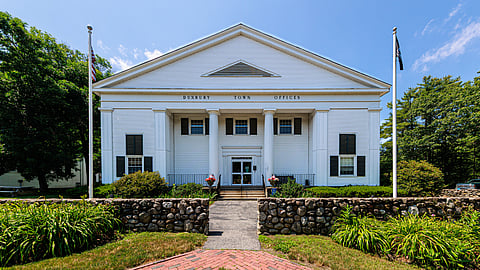


DUXBURY — The planning board will begin rewriting some of the town’s zoning bylaws to be more “protective,” at the direction of the select board and pending approval at future town meetings.
In a presentation to the select board April 27, Planning Board Chair Kristin Rappe described years of effort to “recodify” zoning bylaws to make them clearer and harder to bypass defining terms and correcting minor errors. But the select board said that making more substantive changes could be a more effective way to “preserve and protect the rural and historical character of the town.”
Duxbury established the zoning bylaw subcommittee in March to “discuss, research, formulate and propose new zoning bylaw amendments,” picking up a process that the town began 15 years ago.
The planning board began studying and recodifying the zoning bylaws because the town felt that some were too vague and open to interpretation. Outside developers could interpret zoning bylaws to allow for the kinds of construction they wanted to undertake, select board members said, potentially violating the spirit of the law without violating the letter.
“When people look at zoning bylaws, they see what they want to see. And if it's not there, they hire a lawyer to advocate that it's there,” Select Board Member Brian Glennon said.
Member Fernando Guitart put it differently: “Sometimes you can drive a bus through our bylaws with the right money and resources behind it,” he said.
Select and planning board members also said that some bylaws are outdated and no longer reflect the town’s goals. Planning Board Member Jim Lampert gave the example of Duxbury’s use tables, which he said were written in 1947.
But the effort to make zoning bylaws clearer and more protective through non-substantive edits has been slow and limiting, select and planning board members said.
“There are a number of provisions in the bylaw that are simply too broad and do not trace actual practice,” said Lampert, who chaired the first group tasked with making non-substantive edits to the bylaws. “How do we deal with those? This is not just a rearrange the chairs on the deck of the Titanic. It takes more than that if we're going to come up with a workable document.”
Select board members urged the planning board to make its own amendment recommendations based on its study of the bylaws, rather than drafting amendments based on select board instructions.
“I would be in favor of allowing [the planning board] to do something more substantive than just changing the fonts and paragraphs,” Glennon said, “knowing that ultimately it's got to go to town meeting, it's got to go through us, it's got to have a public hearing.”
The zoning bylaw subcommittee meets each Monday at 8:15 a.m. at town hall. Rappe said that the subcommittee would only propose changes after seeking input from the select board and members of the public. She identified some of the subcommittee’s steps in crafting amendments as reviewing existing case law and other municipalities’ bylaws, studying whether the town should create separate districts with different energy regulations and monitoring state-level developments in zoning laws.
“We're really fortunate to have a talented [planning] board that is picking these up and running with them because it's a great service to the town,” Glennon said.
About the South Shore Times
The South Shore Times is an independent, locally-owned digital news platform, free to readers, that covers communities south of Boston. Our articles are written by South Shore reporters, not AI.
For more South Shore news, subscribe to our newsletter.