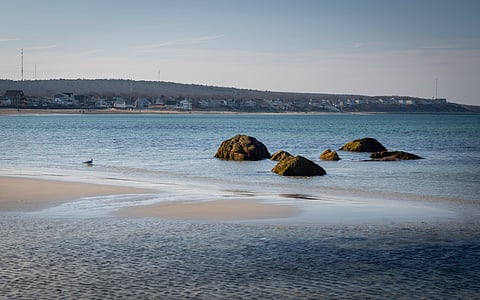

The Massachusetts Department of Environmental Protection has dismissed Holtec International’s appeal of a decision preventing the company from discharging up to 1.1 million gallons of treated wastewater from the Pilgrim Nuclear Power Station into Cape Cod Bay, according to a release from MassDEP.
MassDEP Commissioner Bonnie Heiple affirmed the agency’s July 2024 denial of Holtec’s request to modify the plant’s Surface Water Discharge Permit. Holtec sought the change as part of its ongoing decommissioning of the Plymouth nuclear plant.
MassDEP denied the application after a public hearing, a public comment period and a review of more than 1,000 submitted comments, according to the release. The agency determined that the proposed discharge would violate the Massachusetts Ocean Sanctuaries Act.
Cape Cod Bay is designated as an ocean sanctuary under state law. The act prohibits the dumping or discharge of commercial, municipal, domestic or industrial waste into protected waters.
After consulting with the Massachusetts Office of Coastal Zone Management, MassDEP concluded that the water Holtec proposed releasing qualified as industrial wastewater and could not legally be discharged into the bay.
Holtec appealed the determination to MassDEP’s Office of Appeals and Dispute Resolution on Aug. 16, 2024. The independent office held three days of evidentiary hearings before issuing a recommended decision supporting the denial in November 2025.
Heiple adopted that recommendation and dismissed Holtec’s appeal following what MassDEP described as a comprehensive review. Holtec may appeal the commissioner’s final decision in Superior Court.
Pilgrim Nuclear Power Station sits along Cape Cod Bay in the Manomet section of Plymouth. Built by Boston Edison, the plant began operation in December 1972. Its General Electric boiling-water reactor generated electricity for more than 46 years.
Entergy purchased Pilgrim from Boston Edison in 1999 as Massachusetts restructured its utility industry. The plant’s operating license was scheduled to expire in 2012, but the Nuclear Regulatory Commission approved a 20-year extension. Pilgrim’s operations drew scrutiny from residents, environmental groups and officials over safety, emergency planning, spent nuclear fuel and effects on Cape Cod Bay.
Entergy announced in 2015 that it would close Pilgrim, citing economic conditions. The reactor stopped generating power on May 31, 2019. Entergy transferred the property, operating license and decommissioning trust fund to Holtec International later that year.
Holtec is a New Jersey technology company specializing in nuclear equipment, spent-fuel storage and decommissioning closed nuclear plants. Its subsidiary, Holtec Decommissioning International, is dismantling Pilgrim under federal and state oversight. The plant’s spent nuclear fuel remains stored in dry casks on the property because the federal government has not established a permanent disposal site. Federal regulators expect decommissioning of most of the property to be completed by 2063.

