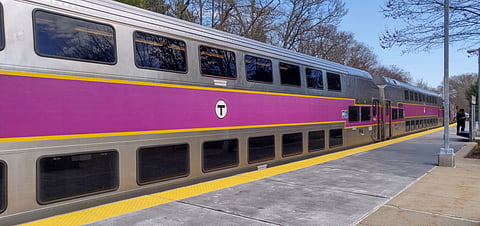


The Massachusetts Supreme Judicial Court (SJC) has delivered a nuanced ruling on the state's MBTA Communities zoning law, upholding the law's constitutionality but invalidating the regulations intended to enforce it. The court’s decision means that while the law remains intact, the state must follow proper regulatory procedures before enforcing compliance.
In its opinion released Thursday, the SJC rejected Milton’s arguments that the state overstepped its authority by requiring municipalities to zone for multifamily housing. However, the court found that the Attorney General’s office and state agencies had not implemented the enforcement regulations through the appropriate administrative process.
“The act creates an affirmative duty for each MBTA community to have a zoning bylaw that allows for at least one district of reasonable size where multifamily housing is permitted as of right” the opinion stated. “However, because current guidelines were not promulgated in accordance with the APA, we declare them ineffective and, as such, presently unenforceable.
This decision has implications beyond Milton, as several communities across the state, including Marshfield, have resisted implementing the zoning changes. At its most recent Town Meeting, Marshfield residents voted against adopting the mandated zoning changes, arguing they would strain local resources and alter the town’s character. "The decision requires the Executive Office of Housing and Livable Communities (EOHLC) to re-promulgate its guidelines according to procedural requirements."
"This decision, which also affirms the Attorney General’s ability to enforce the law, recognizes that we are in the midst of a severe housing crisis that requires municipal, regional, and state government to work together towards bold and creative solutions," said Marc Draisen, Executive Director of the Metropolitan Area Planning Council in a statement.
A Statewide Housing Crisis
The MBTA Communities law, enacted in 2021, requires 175 municipalities served by the Massachusetts Bay Transportation Authority (MBTA) to allow at least one zoning district near transit stations where multifamily housing can be built as of right. The law aims to alleviate the state’s housing shortage and promote sustainable development near public transportation.
Failure to comply could render towns ineligible for certain state grants, including those funding infrastructure and affordable housing projects. However, with the enforcement regulations now invalidated, towns may have additional time to act before facing penalties.
Milton’s case, filed in 2022, argued that the law infringes on local governance and imposes unfunded mandates. While the SJC dismissed these claims, it emphasized the need for the state to finalize regulations properly before enforcing compliance.
What’s Next for Towns Like Marshfield?
While the SJC’s ruling establishes the legal framework for the MBTA Communities law, it also presses pause on enforcement until proper regulations are in place. For towns like Marshfield, this means the clock is ticking. State officials have signaled their intent to restart the regulatory process, which could lead to renewed compliance deadlines in 2025.
"EOHLC anticipates releasing emergency draft regulations within the week, which will be followed by a public comment period," said Draisen.
In Marshfield, where resistance runs high, residents must decide whether to reconsider their stance or risk losing access to key state funding once enforcement resumes.