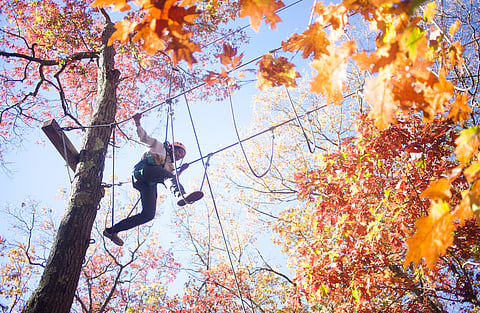

Hale Education announced the permanent protection of over 1,100 acres of land in Dover and Westwood, the most significant conservation achievement in Hale’s 108-year history and one of Greater Boston’s biggest conservation wins in more than half a century.
With two sweeping Conservation Restrictions (CRs) officially approved by the Commonwealth’s Executive Office of Energy and Environmental Affairs and the select boards of Dover and Westwood, Hale is now one of the largest privately owned conservation landscapes in southern New England. Larger than New York City’s Central Park by several hundred acres, it joins the ranks of similarly expansive preserves, including Boston’s Emerald Necklace and Mass Audubon’s Ipswich River and Moose Hill Wildlife Sanctuaries in Topsfield and Sharon (respectively).

The protected land includes forests that capture carbon and support climate resilience, wetlands that filter the Charles and Neponset river watersheds, and critical habitats for native plants and animals. It also features trails, ponds, and outdoor classrooms that support outdoor education, recreation, and community programs.
“This is a defining moment for Hale and Massachusetts,” said Dr. Aaron Morehouse, executive director of Hale Education. “We’ve always believed the outdoors should be a classroom and a common ground. And by protecting this land forever, we’ve made good on a promise that future generations will have a unique place to learn, explore, and build community just a few miles from downtown Boston.”
This milestone was made possible by Hale’s Campaign for Kids, Conservation, and Community, a $38.5-million fundraising effort supported by more than 3,000 individuals, foundations, and corporations. This broad community support allowed Hale to place two CRs on its land, legally ensuring it will forever be protected as a place where people can connect with nature, children can learn and explore, and Hale can offer its education and camp programs. The campaign also shored up Hale’s endowment, providing a financial foundation for long-term land stewardship, educational programs, and public access.
Hale’s CRs will be held by The Trustees of Reservations. Hale retains full ownership, operational control, and management of the property and will maintain its long-standing outdoor programs and facilities that serve more than 16,000 people per year.
Conservation Restrictions are among the strongest forms of land protection available in Massachusetts, and Hale’s CRs guarantee the property will remain intact and accessible for future generations. In addition to protecting open space, the CRs safeguard public access and use of more than 25 miles of trails, formalizing a tradition of community enjoyment.
Importantly, the move strengthens Hale’s mission. Since the land remains privately owned by Hale, its award-winning camps, extensive school programs, and longstanding community partnerships will continue to operate in their natural home. Future mission-aligned development, such as cabins, classrooms, or wellness facilities, will be limited to clearly defined zones and monitored by The Trustees.
“This effort took many years of planning, hundreds of conversations, and a shared commitment to the public good,” Morehouse added. “We’re incredibly grateful to the thousands of people who made it possible. Together, we’ve protected not just a place, but a promise.”